The package is evolving, and its installation link changes with each new version. If something doesn’t match what you see on screen, confirm with your Customer Success Manager that you’re using the current version.
So far, conversations are triggered from Treble. With this package you can do it the other way around: a Salesforce automation flow triggers a Treble WhatsApp conversation. It’s useful for cases like: when a lead changes to a certain status, automatically sending them a WhatsApp template; or when a request is created, starting the follow-up conversation without anyone having to do anything.

Before you start

The API key is a credential with access to your Treble account. Don’t share it through open channels, don’t paste it into shared documents, and if you think it was exposed, ask for it to be regenerated.

1. Install the package

With your Salesforce session open, go to this link:
About the link identifier. The final part (04taj000000A3B7AAK) is the package version Id. When a new version is published, that Id changes.If the link doesn’t open, asks you for an installation password, or installs something that doesn’t match what you see here, you’re probably using an old link: ask your Customer Success Manager for the current one.
If your org is a sandbox, replace login.salesforce.com with test.salesforce.com in the link.
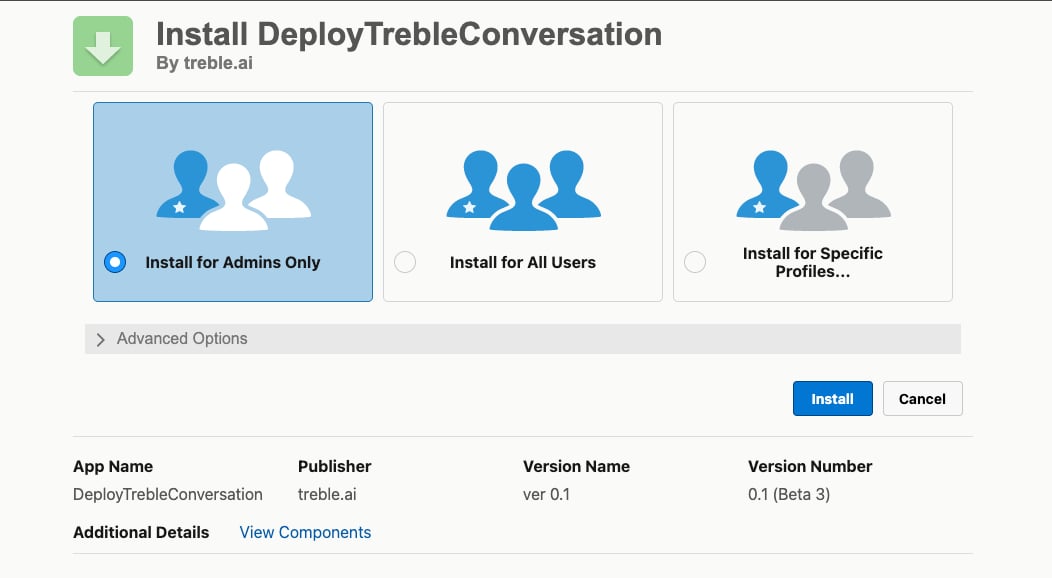
You’ll see the installation screen for the DeployTrebleConversation package. Installation screen for the DeployTrebleConversation package Choose who can use it: Click Install and wait for Salesforce to confirm the installation.

2. Configure the credential

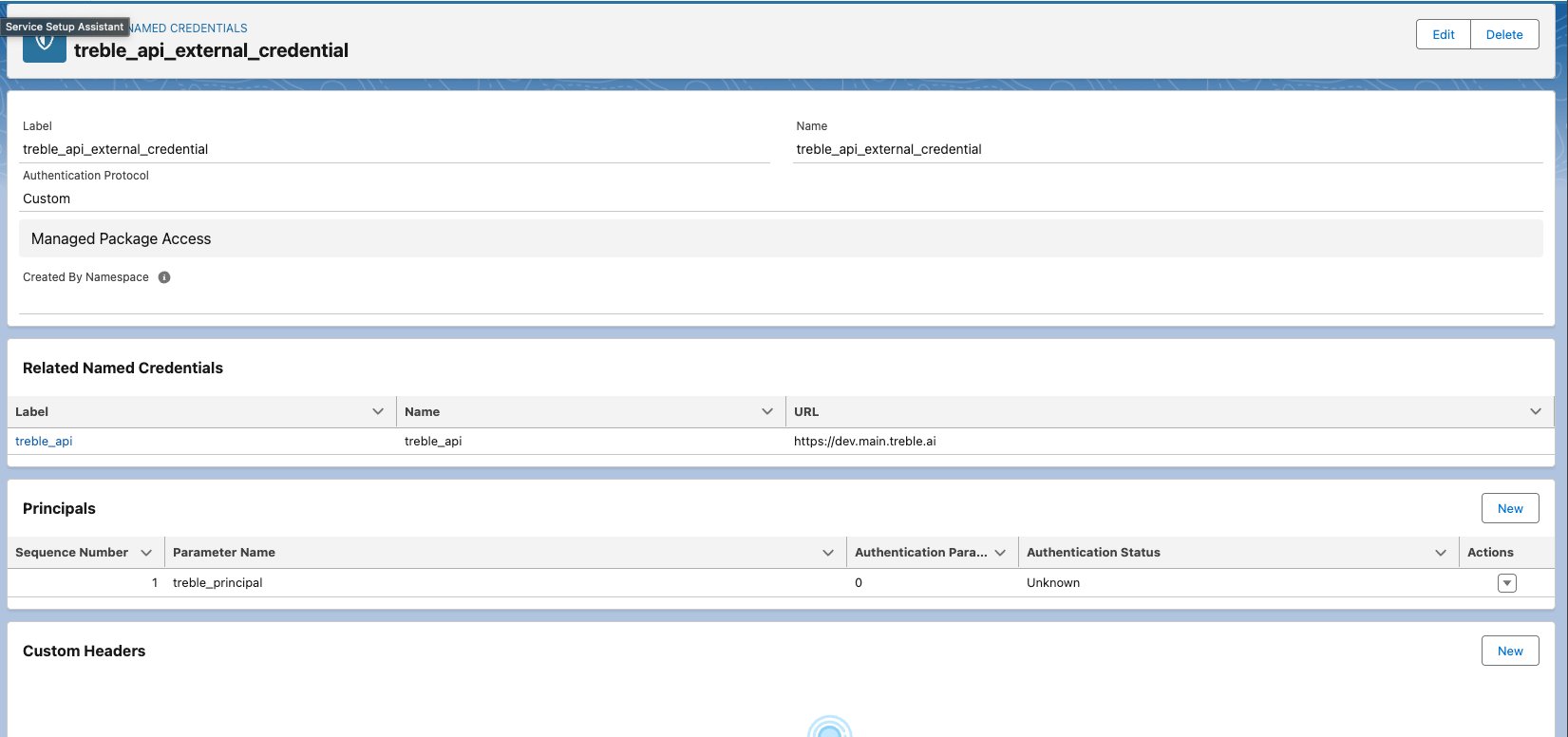
The package installs an external credential and a named credential, which are what allow Salesforce to call the Treble API. Treble external credential detail
1

Open Setup → Named Credentials

You’ll see the external credential treble_api_external_credential and, related to it, the named credential treble_api.
2

Confirm the URL (usually you don't need to touch it)

The package already comes with the credential pointing to https://main.treble.ai. You don’t have to configure it: just verify that it’s set that way.
3

Add the authorization header

In the external credential, in the Custom Headers section, click New and create:Save.

3. Give users permissions

Salesforce doesn’t allow using an external credential without an explicit permission. The package comes with a ready-made permission set.
1

Open Setup → Permission Sets

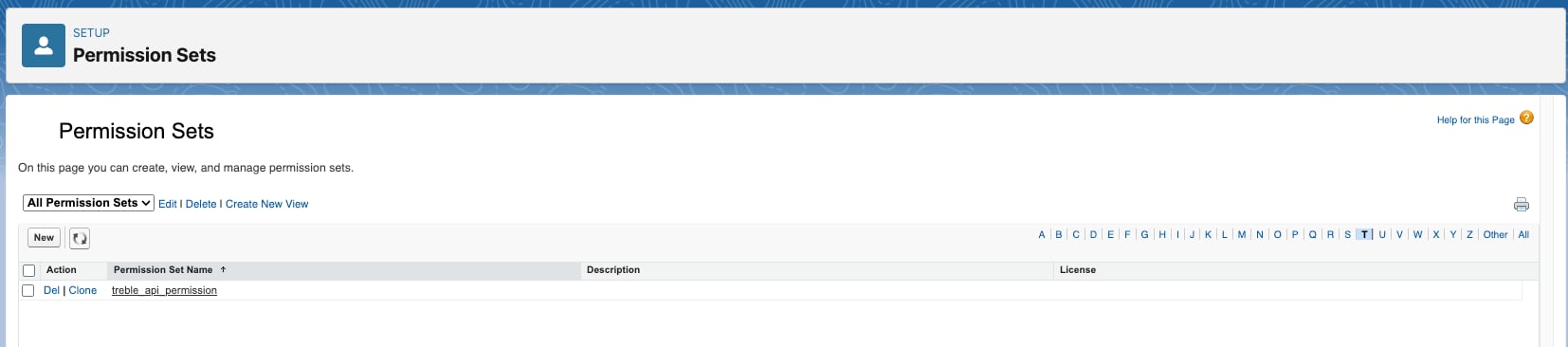
Look for the treble_api_permission permission set.The treble_api_permission permission set
2

Confirm access to the credential

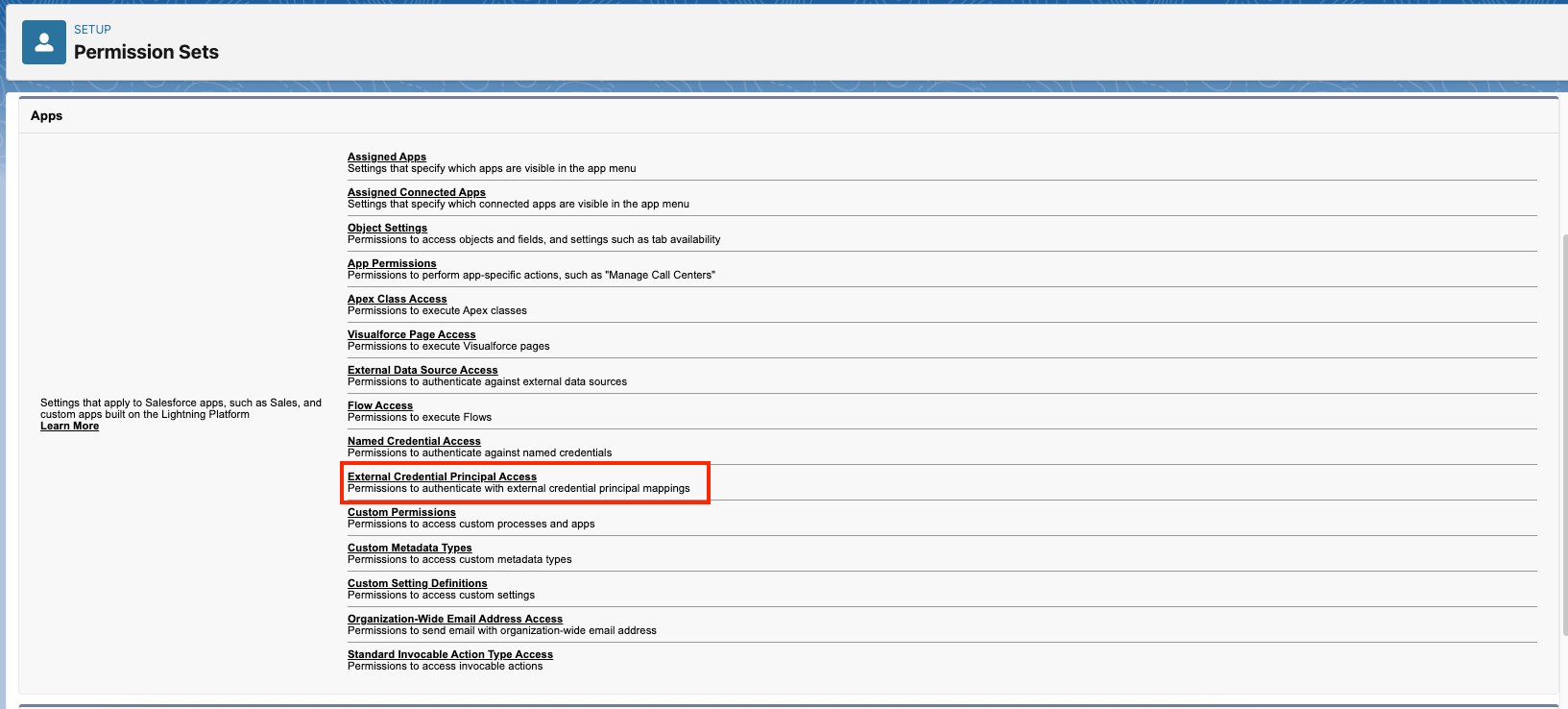
Inside the set, go to External Credential Principal Access and verify that the Treble principal is there.External Credential Principal Access section
3

Assign the set to users

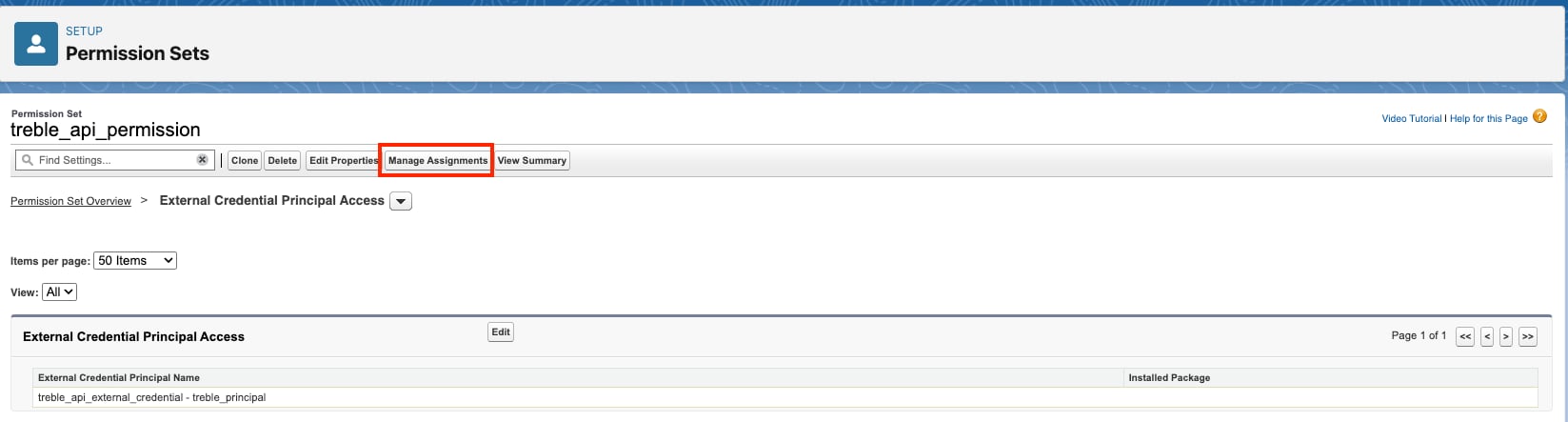
Click Manage Assignments → Add Assignments and select the users who are going to run the flows.Manage permission set assignments
If the flow runs automatically (because of a record change, not because someone clicks), assign the permission to the user the flow runs as, not just to administrators. It’s the most common mistake in this part.

4. Create the flow that launches the conversation

With the package installed and the permissions assigned, the Treble action is now available in the Salesforce Flow Builder. The following example launches a WhatsApp conversation every time an account is created. The same structure works for any other trigger.
1

Go to Flows

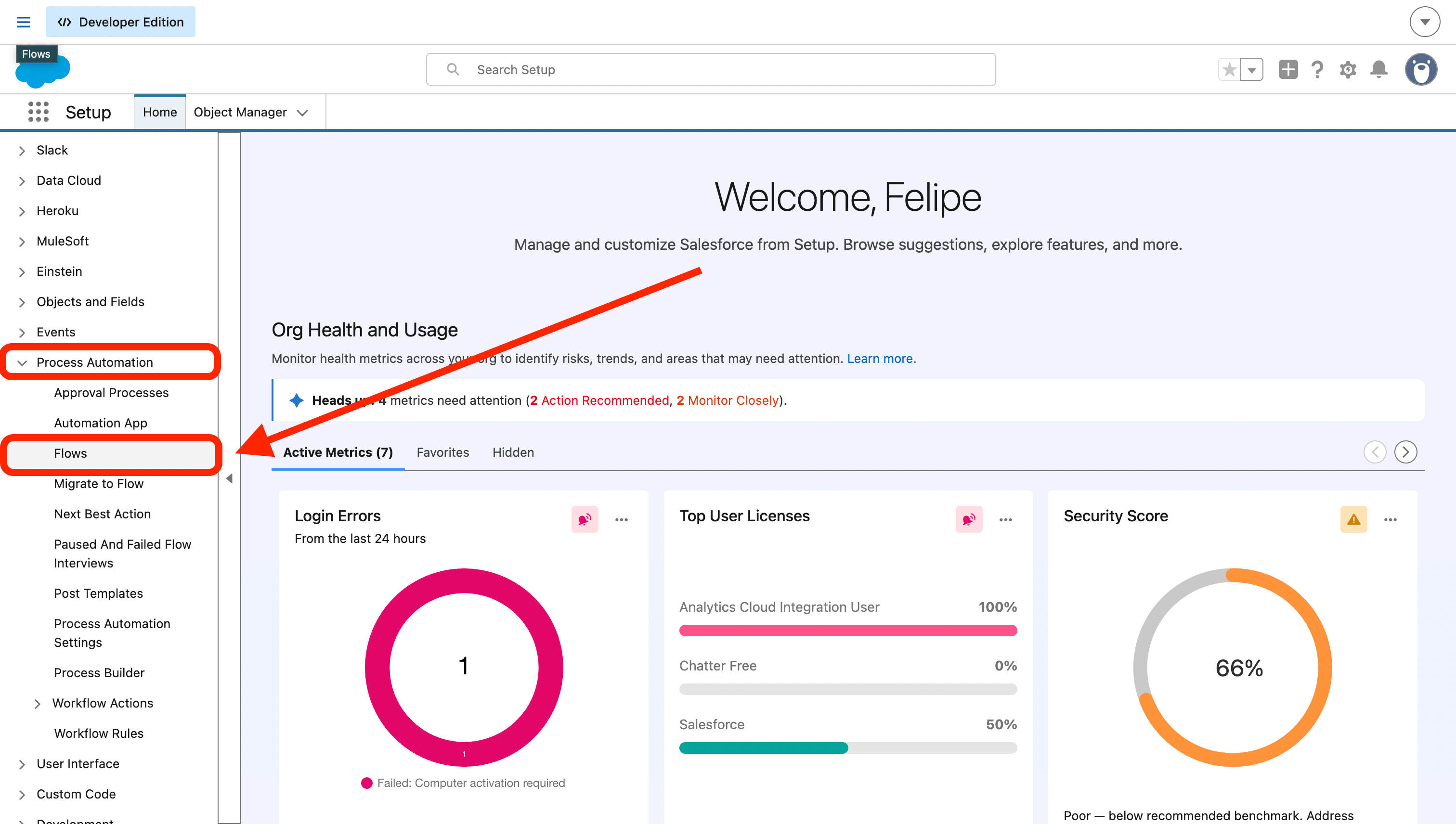
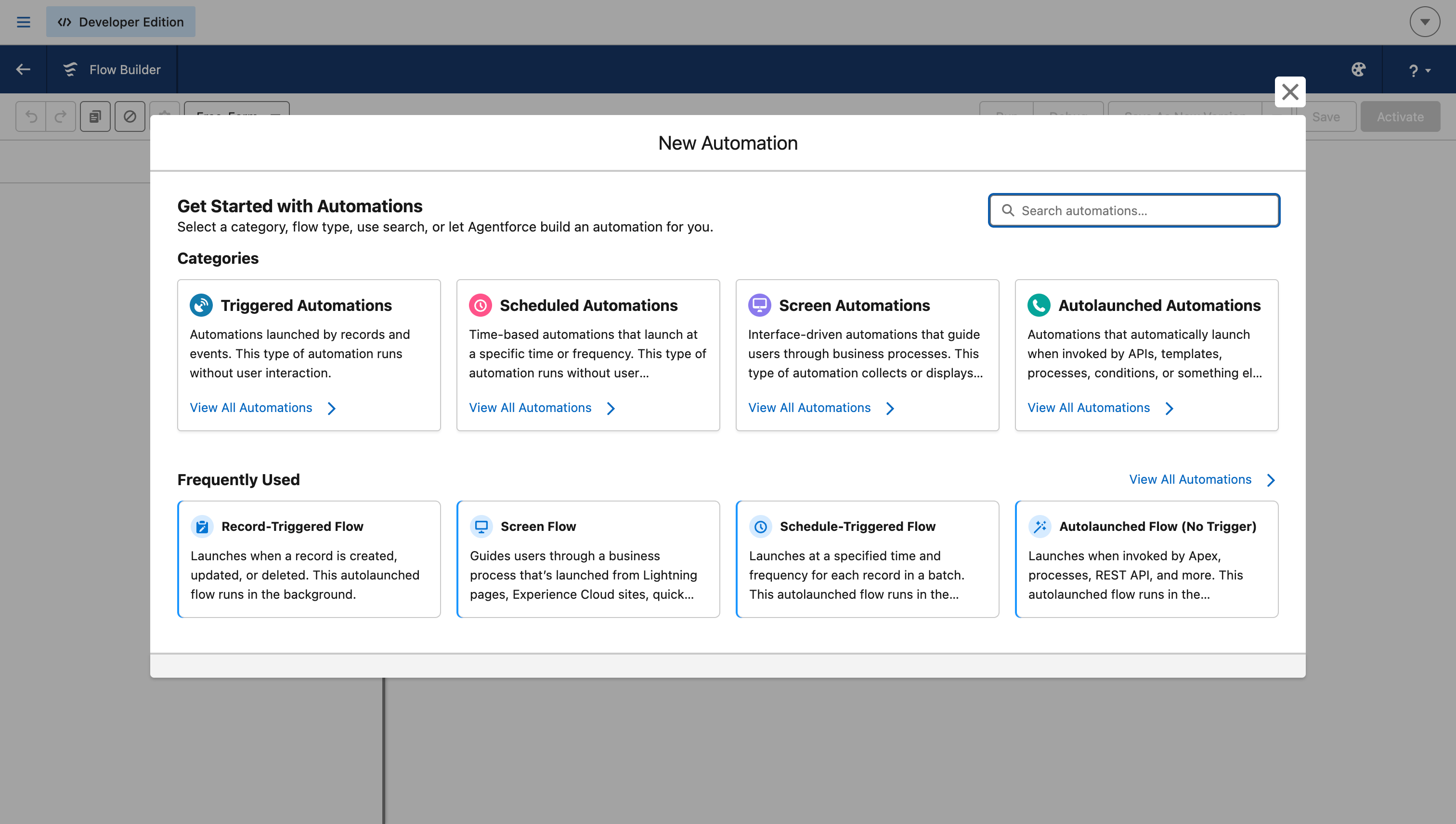
In Setup, go to Process Automation → Flows and click New Flow.Flows inside Process Automation
2

Choose the flow type

For it to trigger on its own when data changes, choose Record-Triggered Flow.Choose Record-Triggered Flow
3

Configure the trigger and enable the asynchronous path

Choose the object (in the example, Account), when it triggers (A record is created), and in Optimize the Flow for choose Actions and Related Records.
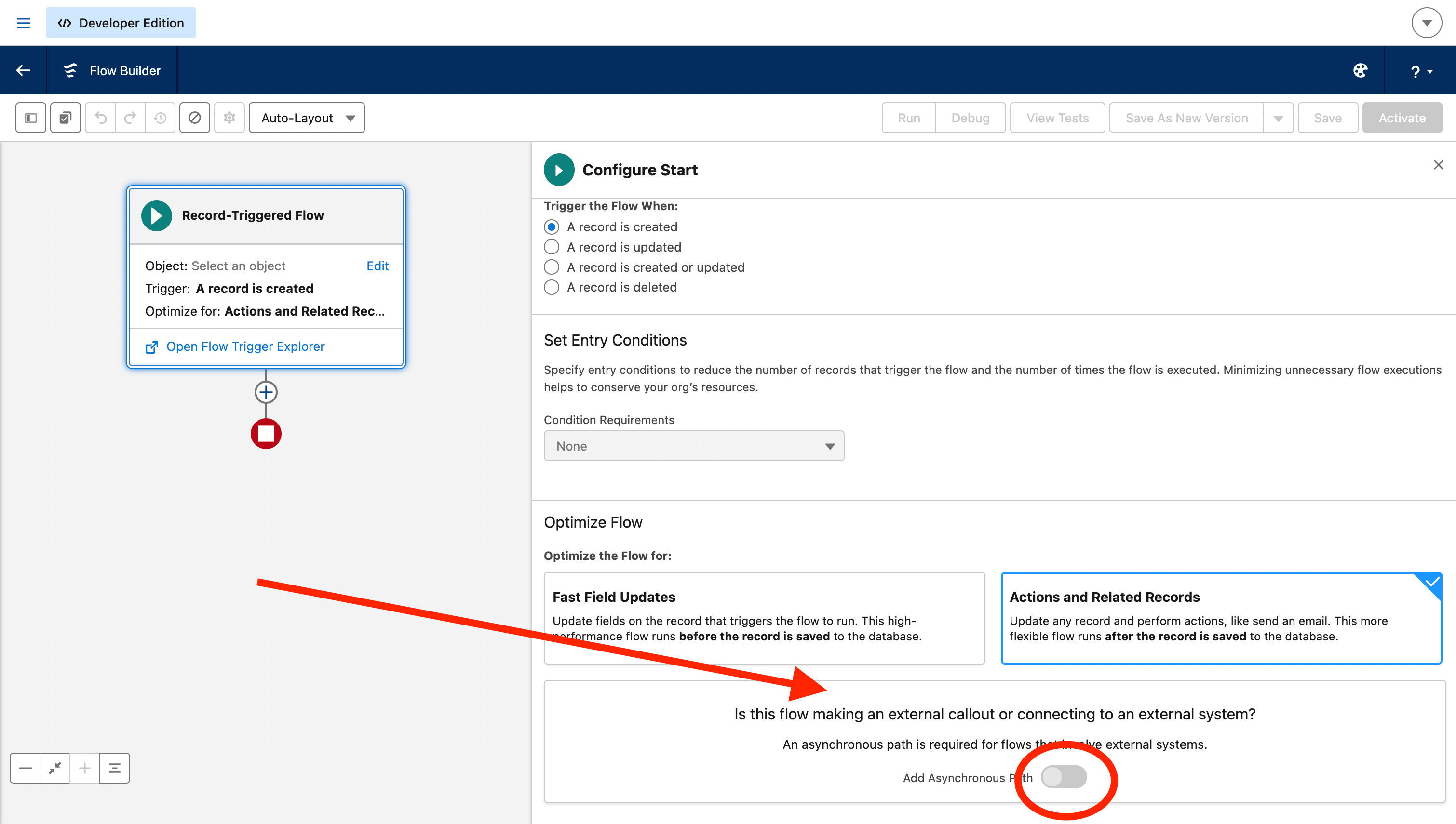
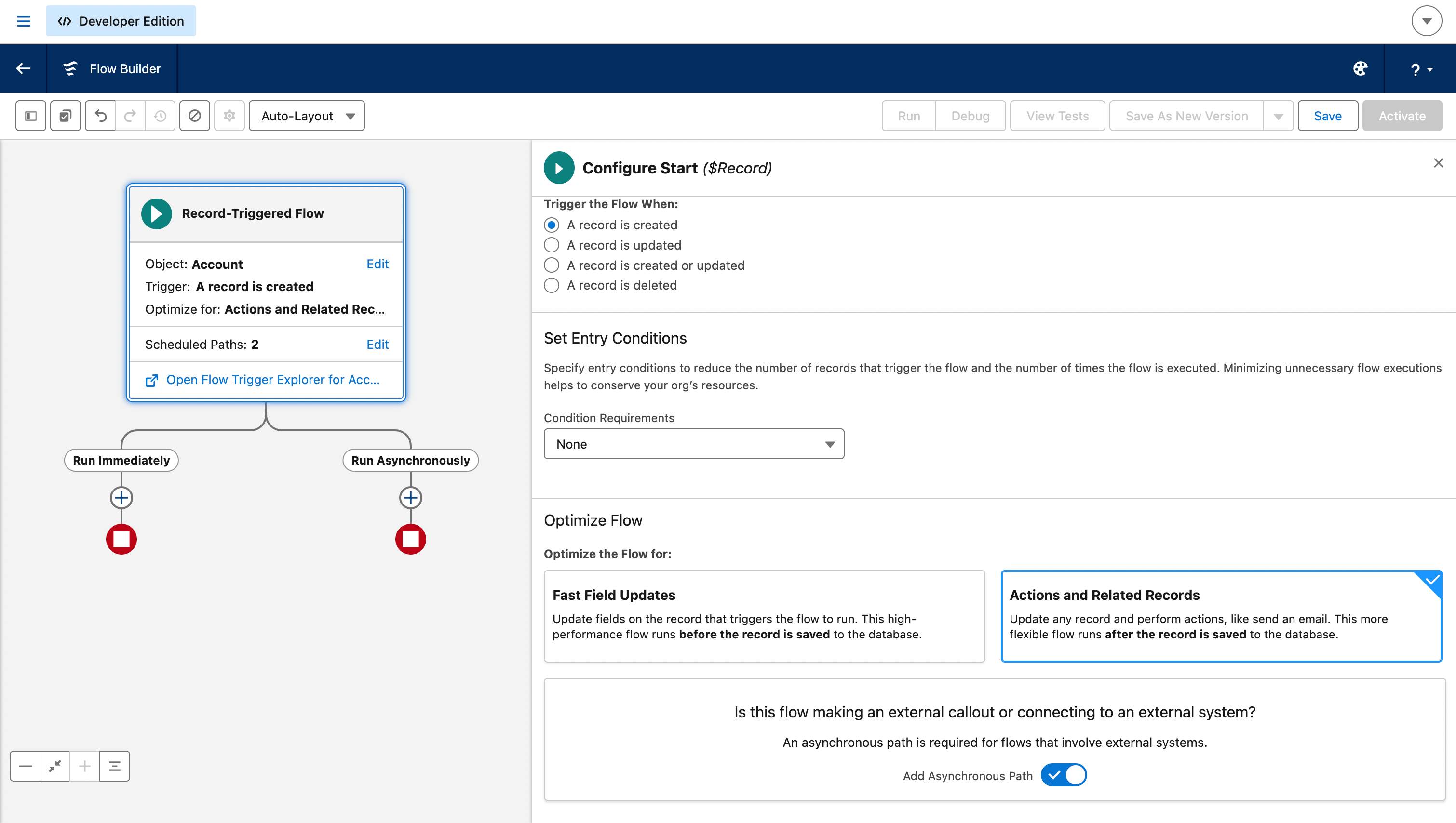
This is the step that’s most often forgotten. Below, enable Add Asynchronous Path.Salesforce doesn’t allow calling an external system from the normal path of a record-triggered flow. Without this path, the Treble action will fail.
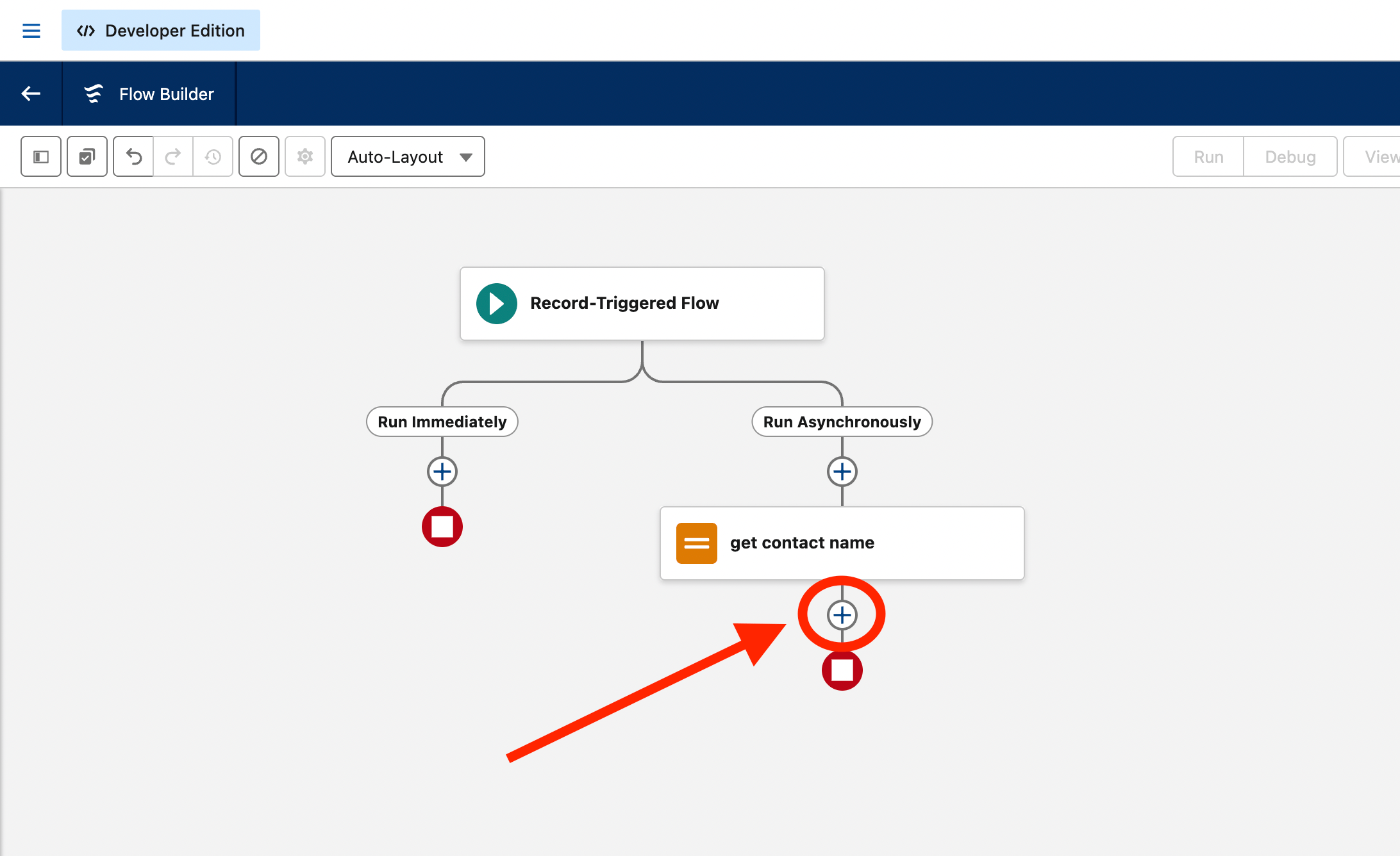
The Add Asynchronous Path toggleWhen you enable it, the flow splits into two paths: Run Immediately and Run Asynchronously.The flow with the immediate and asynchronous paths
Everything that calls Treble goes in the Run Asynchronously branch.
4

Optional: store the data you need in variables
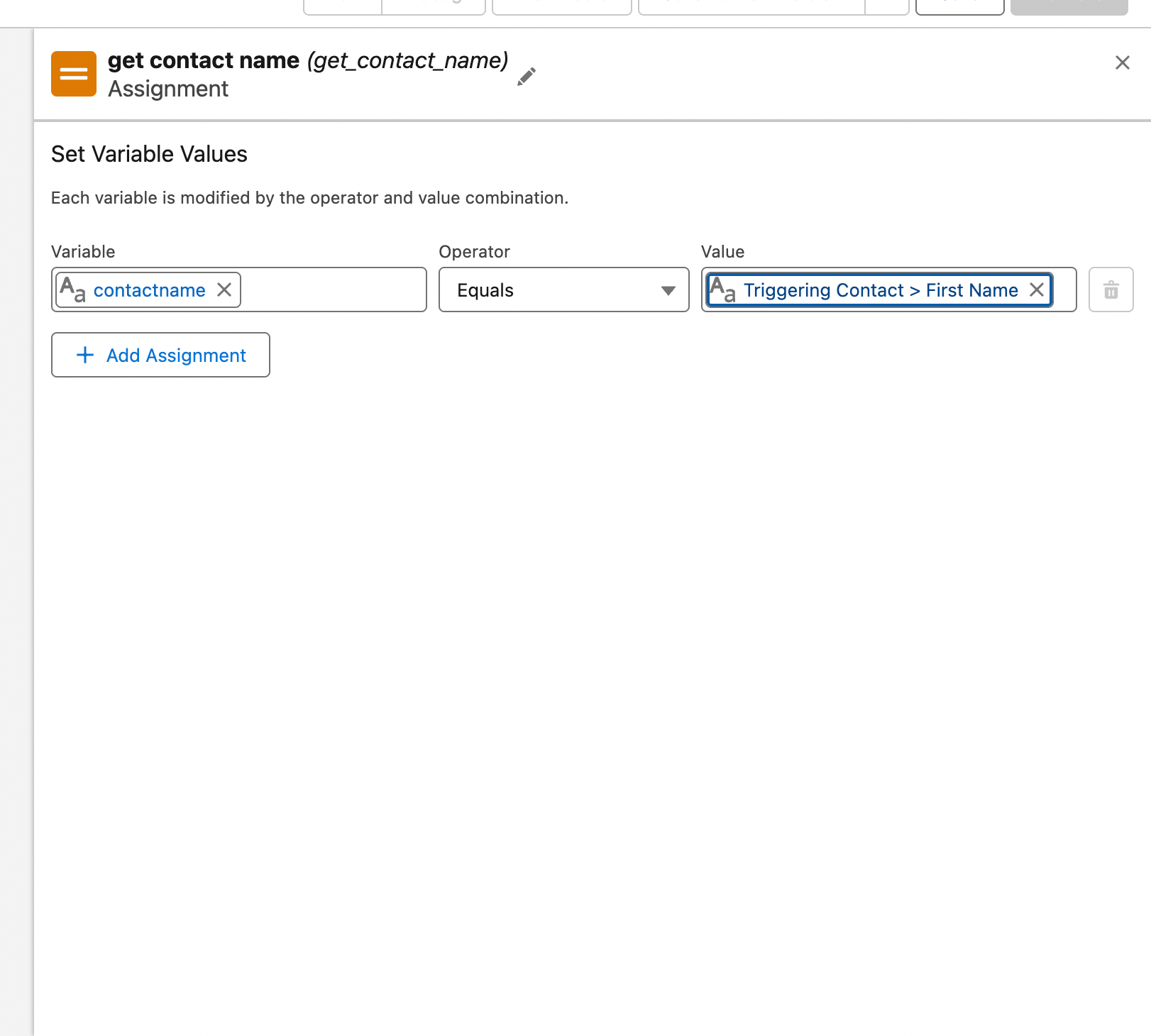
If you want to have record data at hand, add an Assignment element in the asynchronous branch.Assignment element storing the contact's nameIn the example, the name of the contact that triggered the flow is stored in a contactname variable. The same is done with the phone, which is the data the Treble action does need.
5

Add the Treble action

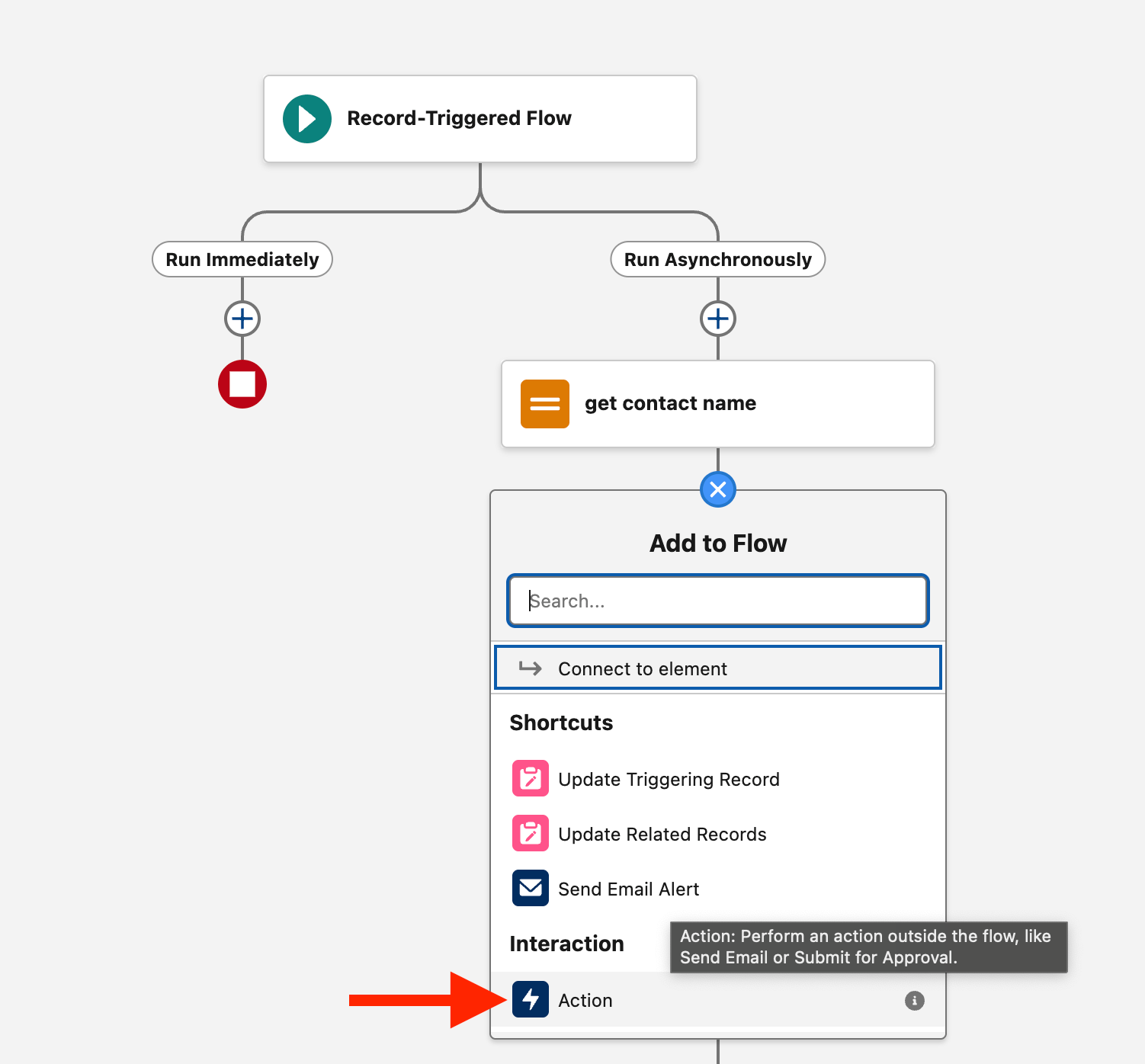
In the asynchronous branch, click + and choose Action.Add an element to the flowChoose the Action elementSearch for treble and select Deploy Treble Conversation.Search for and choose the Deploy Treble Conversation action
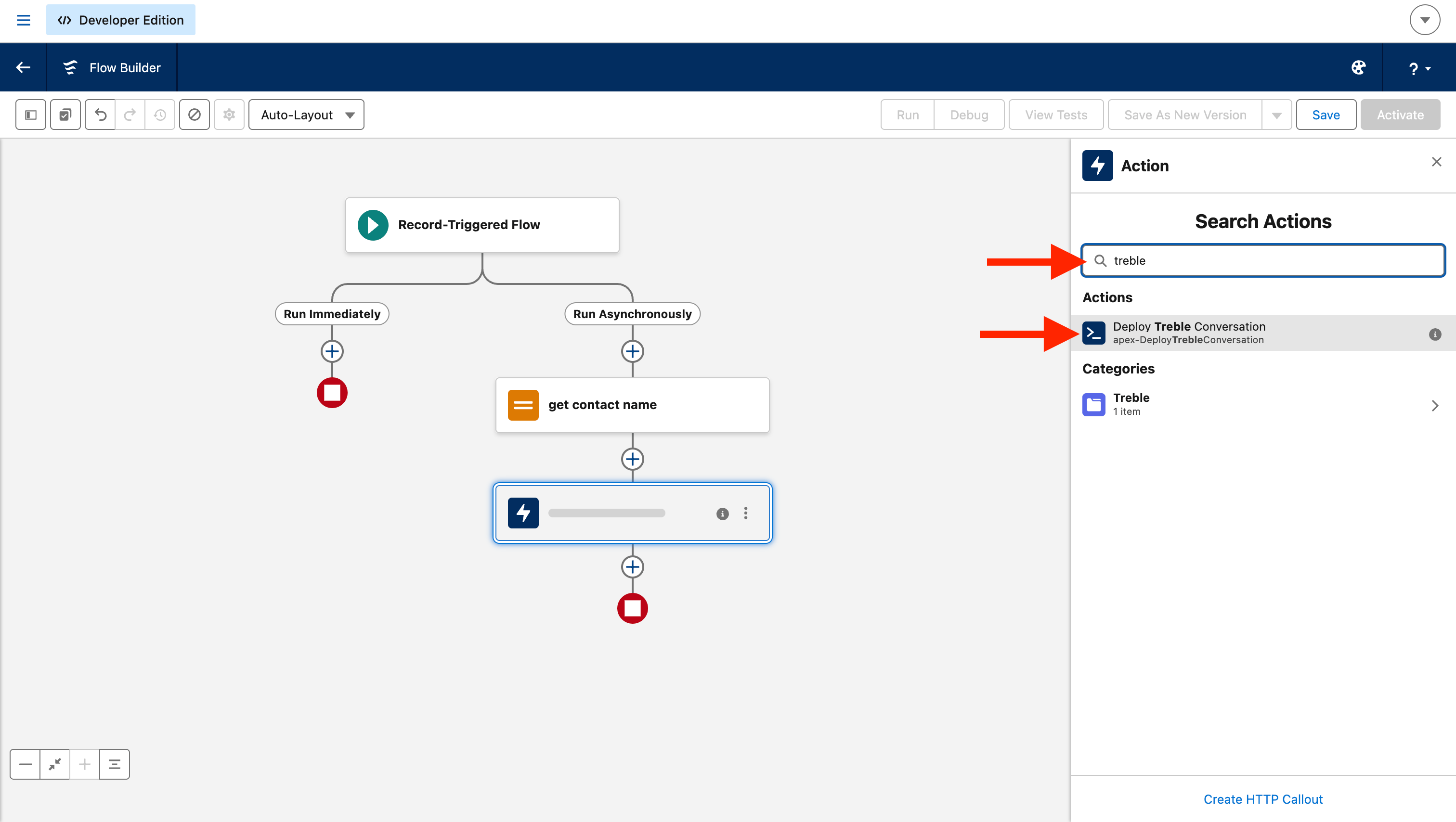
If it doesn’t appear, it’s an installation or permissions problem, not a flow problem. Check common issues.
6

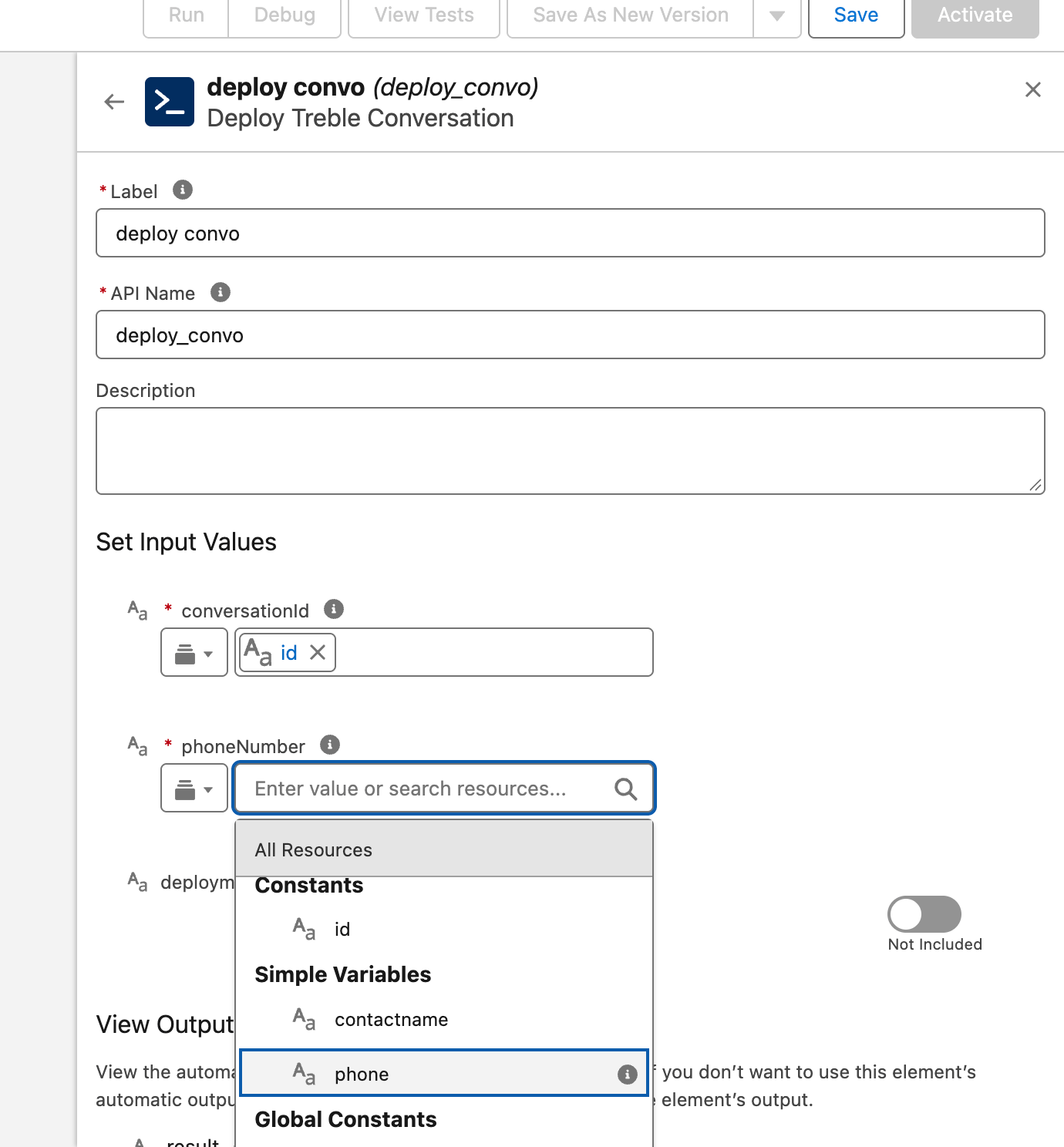
Fill in the parameters

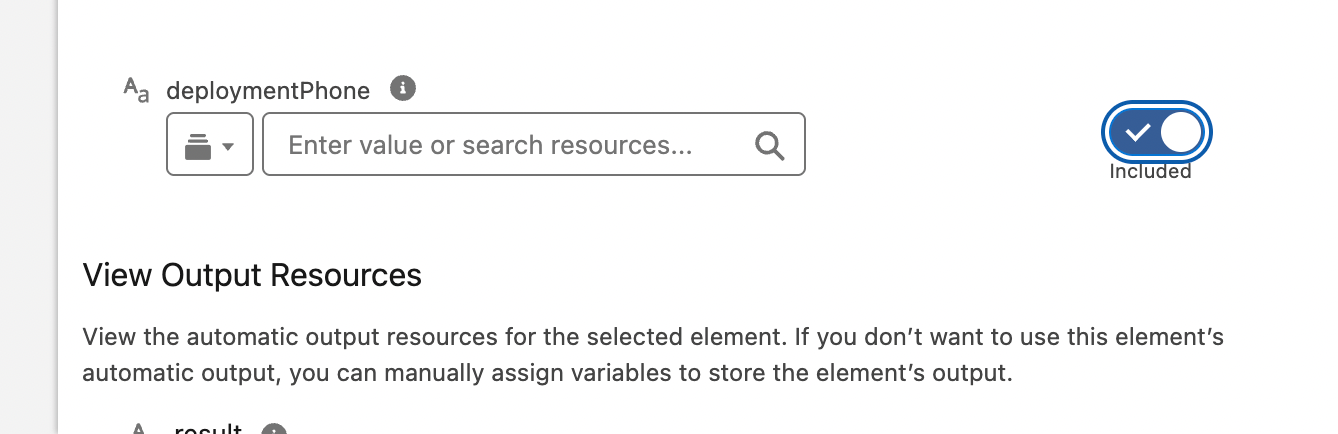
conversationId and phoneNumber parametersOptional deploymentPhone parameter and the result
deploymentPhone comes disabled (“Not Included”). Enable it only if you’re going to use it.
7

Save and activate

Click Save and then Activate. A flow that’s saved but not activated doesn’t run.

What the action does under the hood

Two things are worth knowing, because they define what can and can’t be done.
The action returns a single output, result, with a text:
or, when something fails:
If you want the flow to react to the failure —send an email, mark a field— you have to add a Decision element that evaluates that text, for example checking whether it starts with Error. There’s no separate success or failure field.
The action sends Treble the destination number and which campaign to launch, and nothing else.That means you can’t pass values from the Salesforce record as WhatsApp template variables from this flow. Message personalization has to be handled on the Treble side: the campaign can read Salesforce data with the CRM blocks once the conversation has started.It’s the most surprising limitation of this package, and it’s worth being clear about it before designing the automation.
The action accepts batches, so it works the same in a flow that processes one record or many.
Under the hood, the action calls Treble’s deployment endpoint, the same one used to launch campaigns via API:

Deployment endpoint

If you have two Treble accounts connected to the same Salesforce, you need to configure the package twice, each with its own API key. The deployments of the two accounts can’t be unified in a single configuration.

Common issues

It’s the classic symptom of an incomplete configuration: the package was installed, but the Authorization header or the permission set aren’t set up correctly.Our engineering team’s recommendation in these cases is to uninstall the package and reinstall it following this guide step by step, instead of trying to fix the existing configuration.
This happens when the installation only partially completed, even if the Salesforce confirmation email arrived.Check in Setup → Named Credentials, External Credentials tab, that treble_api_external_credential exists. If it’s not there, uninstall the package and reinstall it.
The two usual causes:
  1. The Authorization header hasn’t been created, or the API key is incomplete.
  2. The user running the flow doesn’t have the treble_api_permission permission set assigned.
Search for treble in the action search box: Deploy Treble Conversation should appear, in the Treble category.If it’s not there, confirm that the package installation completed correctly and that your user is within the scope you chose when installing (admins, all users, or specific profiles).
You need to enable the asynchronous path. Salesforce doesn’t allow calling an external system from the immediate path of a record-triggered flow.Open Configure Start, enable Add Asynchronous Path, and move the Treble action to the Run Asynchronously branch.
It’s the permission case: an automatic flow runs as a different user than you. Assign the permission set to that user.

Next steps

WhatsApp inside Salesforce

So advisors can reply without leaving the CRM.

Marketing Cloud

Launch conversations from Marketing Cloud.